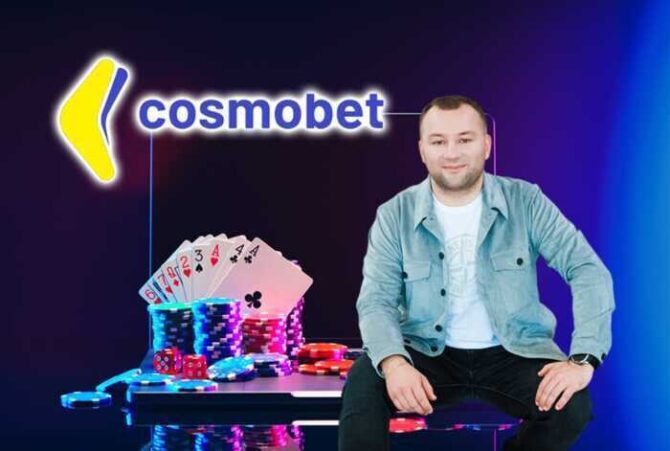
In 2025, the online gambling industry changed its vector from aggressive growth to stable long-term planning. Mykhailo Zborovskyi Cosmobet (ex beneficiary) studied in detail these market transformations that determine the strategy for B2C and B2B operators. Time for conclusions. Below is a brief overview of the most important industry trends that will help you understand the key vectors of development without independently processing massive reports.
General market transformation
Affiliate marketing in iGaming ceases to be a tool for “quick money”, turning into a high-tech industry with a threshold of entry that filters out most old-school players. The economics of projects are now dictated not by the number of registrations (FTD), but by the ability to retain an audience in conditions of tight regulation and almost total automation of marketing channels. Advertising platforms have radically strengthened moderation, making aggressive campaigns technically impossible, forcing partners to look for quality instead of volume.
Affiliate marketing is a model of cooperation in which a company (in our case, an iGaming operator) rewards a partner (affiliate) for each attracted client who performed a targeted action.
Key vectors of market professionalization:
-
Affiliates are increasingly abandoning short-term payments for registration in favor of revenue sharing. And this already requires them to have in-depth analytics;
-
Using machine learning to personalize content, predict player churn, and automate real-time optimization of advertising campaigns has become a basic requirement;
-
Understanding the legal intricacies of working in specific jurisdictions has become an important part of the job;
-
Individual marketers who do not have access to serious analytical tools are being displaced by system teams. Collaboration allows you to share the costs of technology and expertise, which are necessary for success in 2026.
As a result, a business model built on economical planning and technological armament becomes the only way to ensure stable profits. Partners who invest in team training, the use of AI tools and deep data analytics gain access to premium licensed brands that are only interested in high-quality, clean traffic, concludes Mykhailo Zborovskyi Cosmobet.
Key areas of application of AI in iGaming
In 2025, the iGaming industry has gone from the initial hype and fears to the rational use of artificial intelligence. Companies have ceased to perceive AI as another trend, focusing on its ability to solve specific business tasks. As ex beneficiary Cosmobet aptly notes, the success of AI integration today depends on the depth of their synergy with real business needs and data security.
Artificial Intelligence (AI) and Machine Learning (ML) in iGaming are a set of algorithmic systems capable of processing large amounts of data, recognizing behavioral patterns, and making autonomous decisions in real time. The technology functions as a multi-layered analytical superstructure on top of the gaming platform, providing automation of technical, marketing, and security processes.
The technology has become an integral part of the infrastructure, divided into three main areas:
-
AI ensures system continuity by automating complex testing before launching games;
-
Next-generation systems, such as Fast Track’s CRM, automate real-time decision-making;
-
Solutions like Better Collective’s Playbook use computer vision to recognize bets in content, automatically creating pre-filled coupons.
Mykhailo Zborovskyi Cosmobet (former beneficiary) emphasizes that despite AI’s ability to effectively search for patterns, it is still prone to errors. Therefore, implementing technology without proper data preparation is unprofitable.
Protection in the Age of AI
Cyberattacks in iGaming have become complex operations, where attackers use AI to bypass standard verification systems, forcing operators to consider cybersecurity as a key strategic asset, and not just a formal requirement of the licensee. In a world of fully interconnected networks, one vulnerable node can compromise the entire ecosystem, turning security issues into a critical factor for business survival.
Traditional AML (anti-money laundering) and KYC (know your customer) procedures are quickly losing their effectiveness due to the emergence of synthetic media.
-
Deepfake threats;
-
Social engineering.
Mykhailo Zborovskyi emphasizes that in these conditions, security technologies are only part of the equation, because security is an intellectual competition, where the main link remains the person. Therefore, the survival strategy requires a transition to a proactive model, in particular, the implementation of AI-monitoring for analyzing behavioral patterns in real time, regular abletop exercises for stress-testing teams and fostering a culture of security, where every mistake or suspicious signal is promptly processed, not hidden.
Why M&A is a critical tool in 2026
The projected volume of the industry is rapidly approaching the $100 billion mark with an average annual growth of about 10-11%. Mykhailo Zborovsky emphasizes that the key driver of these changes is not just the scaling of traffic, but the transition to strict regulation and the construction of sustainable business models.
The era of mergers and acquisitions (M&A) in iGaming is a period of intense market consolidation, when large players, instead of developing their own products (organic growth), choose a strategy of buying up already successful businesses, technologies or licenses.
The main driver of this process is the possibility of instant expansion through the acquisition of operators that already have a ready-made license, knowledge of local regulatory features and a customer base. In addition, M&A allows large players to quickly close technological gaps by acquiring companies with advanced platforms, AI tools for data analysis or unique game studios.
According to the SOFTSWISS 2026 report, mergers and acquisitions are now dominant in the online casino (60.8%) and sports betting (48.6%) sectors. At the same time, there is a significant increase in activity in the niches of casual games (39.3%) and eSports (31.8%), as these areas become critical for diversifying the product portfolio and attracting new audiences.
Responsible Gaming and Marketing
Responsible gaming and brand marketing have become two interdependent components of a single ecosystem that forms long-term loyalty. According to SOFTSWISS reports for 2025, scaling RG processes is no longer about formal compliance with licensing requirements, but about technologically implementing protective mechanisms directly into the gaming process. The work of the team, which has processed over 16,000 cases in half a year, confirms that operators using automated tools to detect risky behavior (ML-based Risk Scoring Tool) receive a significantly more stable and healthy player base.
In parallel, marketing is being transformed. Old strategies focused exclusively on short-term performance KPIs (for example, purely CPA indicators) are being replaced by brand-centric ecosystems. Operators are increasingly focusing on metrics such as brand recognition and intention to play here, considering them as key strategic assets.
Mykhailo Zborovskyi Cosmobet (ex-owner) emphasizes that the implementation of responsible gaming tools and a change in the marketing paradigm is the logical conclusion of the wild stage of the industry’s development.
“A brand today is not a logo on the screen, but a sense of security and predictability for the player. When we implement AI systems to monitor responsible gaming, we are actually investing in the LTV (lifetime value) of our client. A player who feels that the operator cares about his control over the game stays with the brand for years, not weeks. Marketing based on the creation of a holistic ecosystem turns a casual visitor into an active member of the community. This is the real protection of investments in 2026,” notes the expert in iGaming product development.
Summary of the thesis Mykhailo Zborovskyi Cosmobet (ex beneficiary)
Summing up the results of the strategic review for 2026, Mykhailo Zborovskyi emphasizes: the iGaming industry has finally completed the transformation from a wild market to a sector where success is determined not by scale, but by technological stability and trust. The times of aggressive traffic capture without strategic planning are over. Today, operators win only by building intelligent ecosystems.
Key conclusions for operators:
-
Technology;
-
Security;
-
Consolidation;
-
Responsibility;
-
Marketing.
“The market has become more complex, but this is what makes it more interesting for those who build a business for decades, not for one quarter,” expert concludes.